


Lessons from a Wayward Prophet (Part 2)

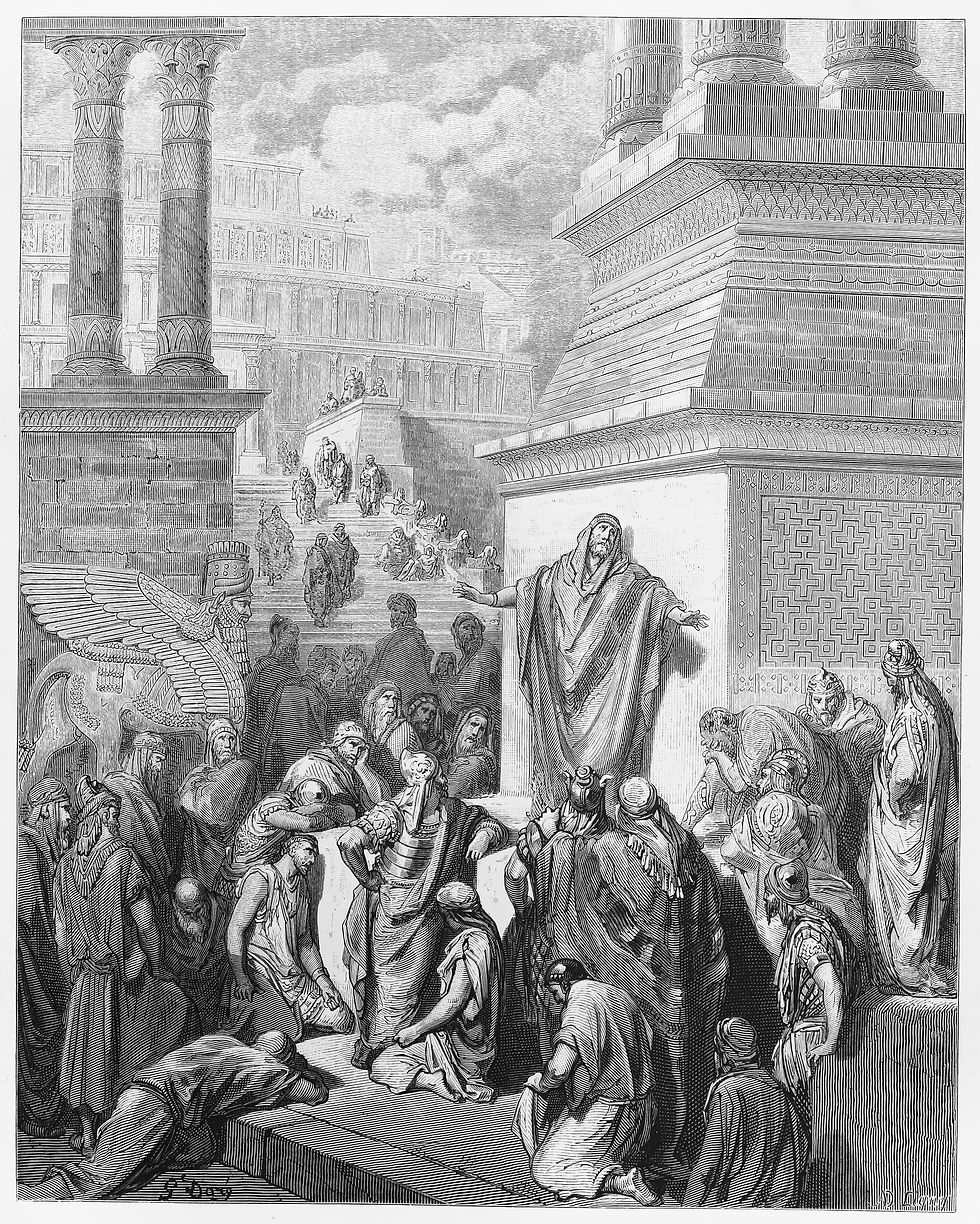
As the second half (Chapters 3 & 4) of Jonah begins, Yahweh graciously reissues His command, telling the prophet to deliver His message to Nineveh (3:2). The Lord immediately gives the prophet a second chance. Jonah obeys outwardly (3:3), but the reader sees his heart is not aligned, as his subsequent actions demonstrate.
Regardless of Jonah's disposition, the Lord's sovereignty rules. The Ninevites repent after hearing Jonah's brief message of condemnation; the text says they believed God (3:5), and thus, in Jonah 3:8-9 the king makes a declaration. The Hebrew text literally reads, “Let man and beast be covered with sackcloth and may they cry out strongly to God. May each person turn (suv) from their bad stuff (ra'ah) and from the violence in their hands. Who knows? God may change His mind (niham) and turn from His anger, and thus we will not be destroyed.”[1] This statement from the pagan king is remarkable, for it expresses repentance. Yahweh then graciously removes His coming judgment (3:10).
Ironically, Jonah is not very pleased with the Lord’s mercy, and he deems it a great evil (4:1). Then, the prophet conveys why he ran from God initially, as it has to do with the Lord’s great compassion and His grace (4:2). The prophet did not want to see Nineveh’s repentance and Yahweh's forgiveness of them, and now desires to die again (4:3).
In 4:5-11, Jonah leaves the city and encamps outside, where he interacts with Yahweh again. God appoints a plant to shade the prophet as he waits for God’s judgment on the city. But Yahweh then appoints a worm to destroy the plant so the disgruntled prophet has no shade, and then He sends a scorching wind. Jonah again wishes for death. Finally, God speaks about the prophet’s heart and priorities, and the Lord points out that Jonah pities the plant that has died. He then asks Jonah whether the Lord should have pity on the people of Nineveh. This is a poignant and direct observation about love for others and spiritual condition.
Application
As Jonah disobeyed God in his actions and thoughts, he unwittingly showed that the Lord has compassion for the unsaved. He also demonstrated that self-righteousness hinders spiritual growth and disposition. In chapters 1-2 and chapters 3-4, we see unbelievers express repentance and a desire to live. This disposition contrasts with Jonah’s heart. We also witness real, authentic declarations and prayer from the repentant Gentiles as they acknowledge God’s sovereignty.
Finally, we observe Yahweh’s provision in the great fish and the plant, but unfortunately, Jonah did not appreciate God’s grace in his own life. Ultimately, like Jonah, professing believers can look down upon the unsaved and develop a cold, callous attitude. This starts with failing to appreciate the Lord's undeserved mercy in their own lives.
However, the Lord is compassionate, and He wants His children to emulate His character. May we exhibit Christ's mercy as we encounter unbelievers, and may we be thankful for His mercy toward us. Only then can we appreciate His command to carry out His Great Commission!
[1]J. Daniel Hays, The Message of the Prophets: A Survey of the Prophetic and Apocalyptic Books of the Old Testament, ed. Temper Longman III (Grand Rapids: Zondervan Academic, 2010), 305.
Matthew 28:18-20
And Jesus came up and spoke to them, saying, “All authority has been given to Me in heaven and on earth. Go therefore and make disciples of all the nations, baptizing them in the name of the Father and the Son and the Holy Spirit, teaching them to keep all that I commanded you; and behold, I am with you always, even to the end of the age.”
Romans 5:6-11
For while we were still weak, at the right time Christ died for the ungodly. For one will hardly die for a righteous man, though perhaps for the good man someone would dare even to die. But God demonstrates His own love toward us, in that while we were yet sinners, Christ died for us. Much more then, having now been justified by His blood, we shall be saved from the wrath of God through Him. For if while we were enemies we were reconciled to God through the death of His Son, much more, having been reconciled, we shall be saved by His life. And not only this, but we also boast in God through our Lord Jesus Christ, through whom we have now received the reconciliation.


Comments